When we think of Gideon we often remember his faith in God, selecting only 300 men to attack the Midianite army of over 100,000, obeying God’s instructions. In this chapter we still seem to see a faithful and humble servant of God. But a deeper inspection reveals cracks under the surface that serve as useful reminders for us today.
Handling conflict with brethren
First, we see Gideon, after his initial victory, being scolded by the Ephraimites for not calling them to fight. Instead of responding with anger, he gives a soft answer, avoiding conflict with his fellow Israelites. This is good - but then his subsequent actions seem to run counter to this. When the men of Succoth and Penuel ridicule him and refuse to help, he swears vengeance against them, and returns to punish and even kill them after defeating Midian.
And then, looking at Gideon’s reply to Ephraim again, we notice something - it was actually God that told Gideon to only select 300 men to fight the Midianites with. Even though Gideon invokes the name of God in his response (“God has delivered into your hands…”), he does not mention God’s will to deliver Israel with only a few men, but instead appeases them with flattery.
Handling Temptations
Gideon knew the One who had truly delivered Israel was not himself, but God. Thus he told them that he would not rule over them, nor his son, but the Lord (Judges 8:23).
Yet his subsequent actions again seemed to contradict this.
First, Gideon took the gold from the plunder and made it into an ephod which he set up in Ophrah, which became an object of idolatry for the people.
Furthermore, despite refusing to be king, Gideon amassed gold and wives (Judges 8:26,30). This was the typical behavior of the kings of other nations, which God explicitly warned Israel’s kings not to emulate (Deut 17:17). He even had a son named Abimelech, which means “my father is king”!
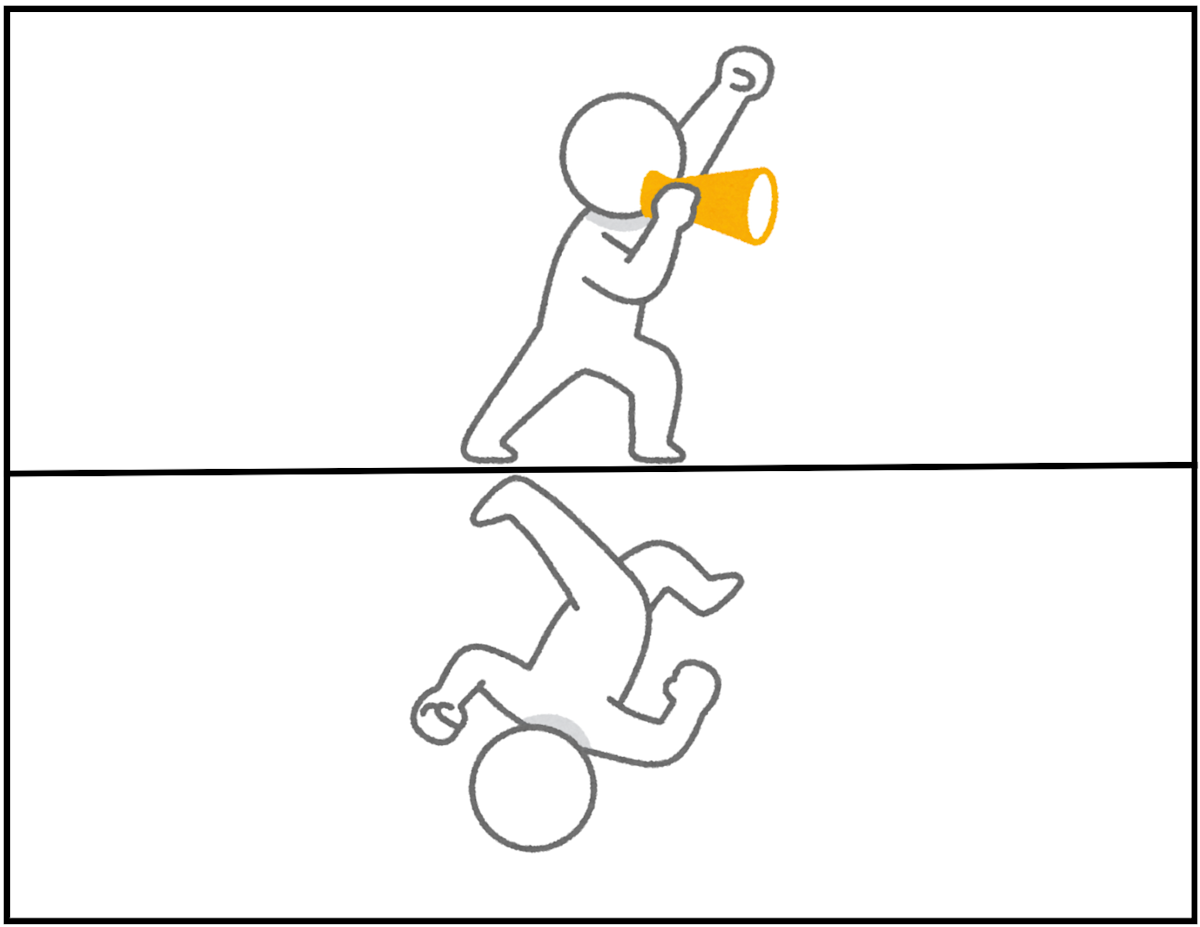
Reflections - What We Say VS What We Do
Gideon was a man with faith, attested by the New Testament (Heb 11:32). He also seemed to have the correct principles in mind in the incident with the men of Ephraim, and when refusing to rule over the people.
However, his actual life and actions remind us that it is possible to have the right ideas and say the right things, while allowing our hearts to lead us into compromise.
We know that Jesus taught us to forgive each other, and we even teach others the same. And in some situations, we are indeed able to put this to practice. But sometimes, when a particular sore spot is touched, or our ego is bruised, we find ourselves unable to control our emotions and end up retaliating.
We know that we need to work on our faith and dedicate time to spiritual nurture in reading the Bible and praying. But day after day, we find it difficult to set aside this time and find ourselves procrastinating, and spending our time on personal entertainment instead.
Indeed, it is not easy to be completely consistent in our faith. But we must remind ourselves that these little missteps and compromises have a subtle yet outsized effect on our walks of faith and whether we are able to please God or not.
The word of God is the mirror that reveals our hearts’ thoughts and intents (James 1:22-25, Heb 4:12). Let us meditate on God’s words and allow Him to show us these discrepancies between our thoughts and actions.