The sound of hooves: Signs of disaster
In a circus, the sound of hooves signals that a dazzling performance is about to begin. The heart relaxes with delight.
On a battlefield, the sound of hooves signals the start of combat. The heart grows heavy with fear.
In the book of Revelation, the sound of hooves is more sobering still. It signals the beginning of the calamities of the last days. In Revelation 6:1-8, four horses are released. Except for the first white horse, which brings conquest rather than disaster, the other three bring disaster. Calamity is on the way.
So what of our hearts? Are we panicked and unsure, or alert and prepared?
After the Lamb opens the seals, the three horses run without pause to the ends of the earth. Their hoof sounds are not meant to drive us into anxiety, but to awaken us. They call us to prepare before the great tribulation comes.
These horses do not appear by chance, nor are they unleashed by Satan. They come only when the Lamb opens the seals. Calamity is real, but not chaotic. The last days may be Satan’s furious final assault against Christ’s kingdom, yet the last days remain under the authority of Christ.
When we remember this, disaster sharpens our vigilance.
Do we hear the sound of hooves?
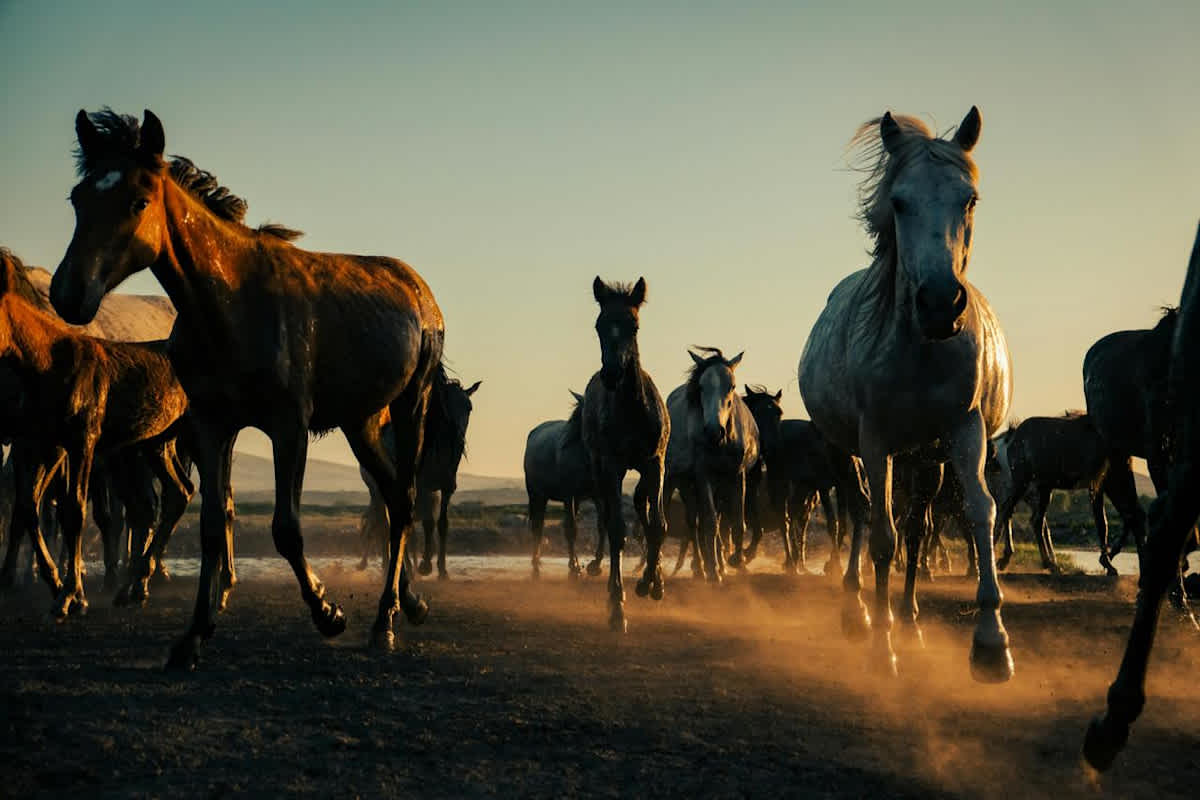
At first, the sound is distant and faint, easy to ignore. But as they draw nearer, it grows clearer—like war drums pounding on our hearts.
Why, then, do people fail to hear?
The world is too noisy. Entertainment, applause, and sorrow compete for our attention, leaving little space for a quiet heart. The chase for status and pleasure dull our hearts to warning. Our hardened hearts realise the signs but refuse to face the coming judgment, choosing instead to eat, drink, and rejoice as usual.
So it was in the days of Noah. People ignored God’s warning until the flood came and swept them away (Mt 24:37-39). Therefore the Lord warns, “Watch therefore, for you do not know what hour your Lord is coming.” (Mt 24:42) Will you heed His warning with reverence and return to Him?
The red horse: When peace is taken
When the Lord opened the second seal, the red horse came out. Its rider was given power to take peace from the earth, so that people would kill one another (Rev 6:3-4). Earlier interpreters saw the red horse as militaristic powers launching wars in the name of ideology and expansion. The great sword he carried symbolises intensified destructive power.
When the sixth angel sounded, the four angels bound at the great river Euphrates were released to kill a third of mankind (Rev 9:13–15). Wherever the sword goes, violence follows. Bloodshed, cries, and screams mark the tragic song of the end times.
Yet the red horse does not run only through nations. It runs through families, stealing peace through quarrels and broken relationships. It runs through churches, as seen in the divisions of the Corinthian church.
War does not begin on the battlefield; it begins in the human heart.
The hooves of the red horse ask: are we agents of peace, or participants in its destruction?
The Lord says, “Blessed are the peacemakers, for they shall be called sons of God.” (Mt 5:9) Peace is not weakness; it is the power of the cross, love expressed through forgiveness.
The black horse: When survival tests the conscience
When the Lord opened the third seal, the black horse appeared. Its rider held a pair of scales, measuring not wealth but conscience under pressure (Rev 6:5-6).
The black horse brings famine. A denarius, a full day’s wage, barely buys enough wheat to survive. Under such pressure, the rich grow richer and the poor poorer.
Life becomes a calculation: what I can afford, what to give up, and what corners to cut. Temptation intensifies. People do whatever it takes to survive, and conscience is easily silenced.
Yet a command is heard: “Do not harm the oil and the wine.” (Rev 6:6) The calamity of the black horse is real, but it is limited. Even in scarcity, God preserves a measure of grace. Grain may fail under drought, but olive trees and grapevines, with their deeper roots, endure.
The tragedy is not scarcity alone, but indifference. People cling to abundance while turning away from others’ suffering.
The hooves of the black horse confront us: do we look away, or do we reach out?
Jesus spoke of a man beaten by robbers and left half dead, ignored by passers-by. Only the good Samaritan came near and used his oil and wine to heal him. He used what he had for love (Lk 10:30-35).
The scales of the black horse measure our hearts—whether we remain faithful to God and compassionate toward others when material pressure mounts.
The pale horse: When death confronts faith
When the Lord opened the fourth seal, the pale horse came out. Its rider was Death. With sword, hunger, pestilence, and beasts, Death killed a quarter of the earth (Rev 6:7-8).
More terrifying than this is humanity’s numbness toward death. When death becomes a statistic, hearts harden to it, and God is taken lightly.
The hooves of the pale horse ask: when suffering and death come, do we harden our hearts or do we repent and return to God?
After 50 years of full-time ministry, I have seen 2 responses to suffering. Some repent and draw nearer to God; suffering becomes a catalyst for spiritual growth. Others complain against God and turn away; suffering becomes an excuse for hardened hearts.
The difference lies in our foundation. Those who hear and obey build their house on the rock; those who do not obey build on sand (Mt 7:24, 27). When we hear the Lord’s words, do we put them into practice?
The pale horse spares many, not from weakness, but because God grants time to repent.
Many waste it. When the sixth seal is opened, the great tribulation arrives. None can hide from God’s wrath (Rev 6:12-17).
One question remains: “Who is able to stand?” (Rev 6:17)
They had spent their lives striving to “stand”—kings through power, officials through strategy, generals through might, the rich through wealth, the strong through strength, even slaves through their masters.
They prepared for every imaginable disaster, except one: standing before God. Only then do they discover they cannot stand.
Who is able to stand before God?
God showed John those who can: people from every nation and tongue, clothed in white robes washed in the blood of the Lamb (Rev 7:9, 13-15).
They stand, not by their own strength or virtue, but by the blood of the Lamb. These are the ones who come out of the great tribulation, having endured by His grace.
We who are baptised have already put on these white robes. Will we endure to the end?
The Lord exhorts us, “Watch therefore, and pray always that you may be counted worthy to escape all these things that will come to pass, and to stand before the Son of Man.” (Lk 21:36)
The heart of the last days is not world wars, but the reality of heaven and hell.
The sound of hooves drawing near is not meant to terrify, but to awaken.
Can the faith you hold today withstand the Lord’s judgment?
Can the life you live today stand before Him?
The sound of hooves is drawing near. Have you heard it?
Reflection Questions
In what ways might noise, busyness, or comfort be dulling my ability to hear the Lord’s warnings?
If the Lord were to return today, would my faith and way of life be able to stand before Him? If not, what is one change I want to make?